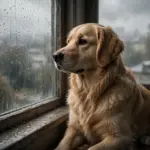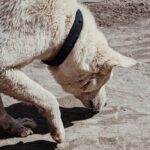
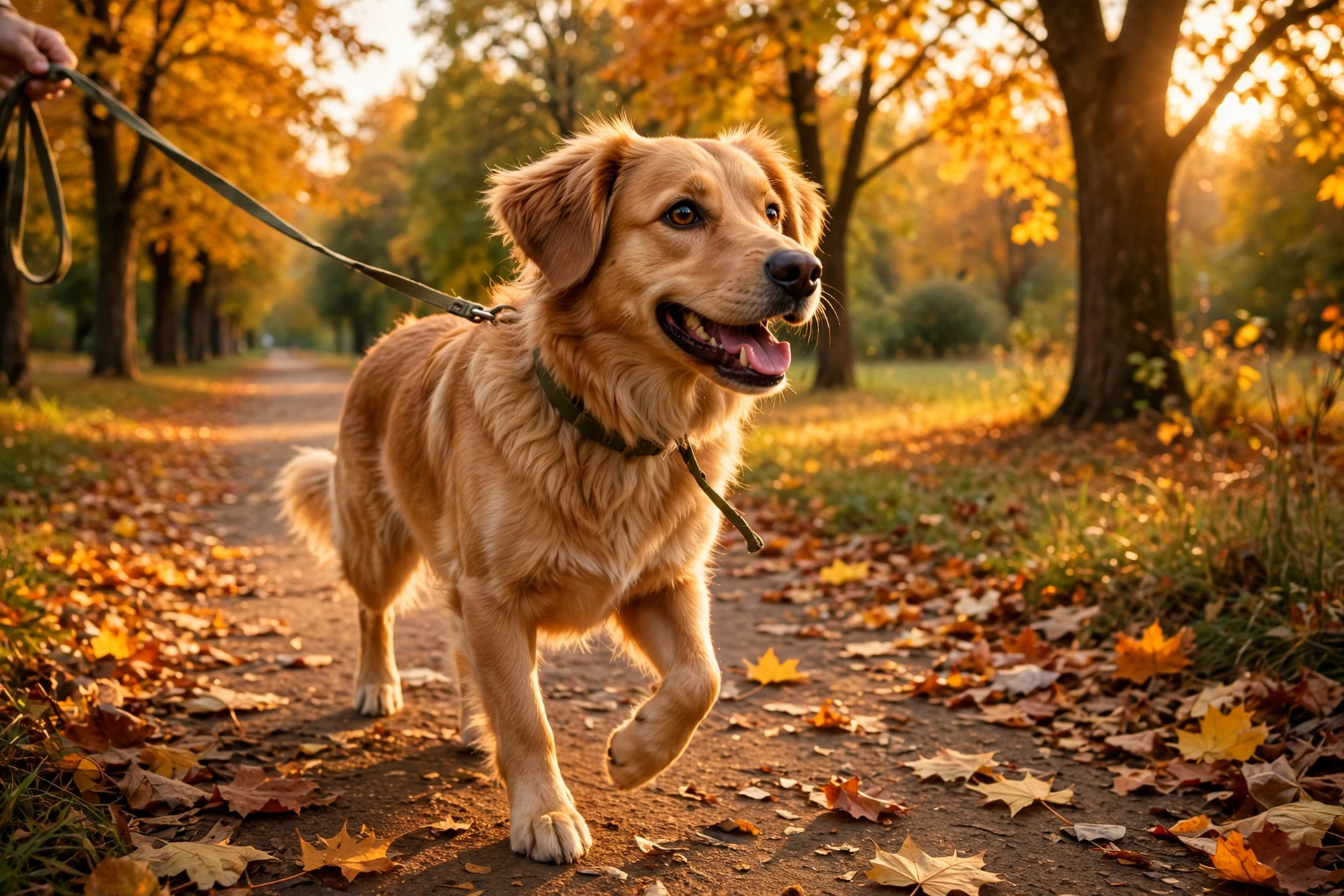
The best stories don’t start at a desk. They start on a walk. Dogs know this. Writers are learning it.
A dog on a walk is a story machine. He stops at the same gate every day to check whether the cat is still there. He loses his mind over a squirrel that was never going to fight him. He picks a favorite puddle and defends it like territory. None of this is planned. All of it is plot.
Why do walks make stories?
Because a walk is movement plus noticing, and that is all a story needs. At a desk you stare at a blank page and wait for an idea. On a walk the ideas come to you, one per block, whether you want them or not.
Your dog does the noticing for you. He stops, and you stop, and for three seconds you’re both looking at the same thing: a gate, a smell, a stranger with a bag that crinkles. That shared attention is a scene. It has a setting, a character, and a question: what happens next?
Take the delivery truck. Every Tuesday at four, the same truck turns onto your street, and your dog loses it at the same corner. That’s not a quirk. That’s a running gag, a routine, a character who shows up on schedule. Sitcoms are built on less. Your dog has been running a weekly show for months and you never wrote it down.
Writers pay for retreats to get this. Dog owners get it twice a day, free, in the rain.
What do you do with it?
Keep a walk log. Three lines after each walk, no more. What the dog noticed. What you noticed. What it reminded you of.
The dog noticed the cat on the wall. You noticed the old man who feeds it. It reminded you of the neighbor you never speak to. That’s not three lines of notes. That’s a character, a setting, and a relationship, and you got them all before breakfast.
Most of the log will be boring. That’s fine. You aren’t writing the log for the boring days. You’re writing it so the good day doesn’t slip past. The day the dog stole a sandwich off a picnic table is a story. The day he didn’t is not. The log tells you which day it was.
Where does the story go?
That’s the part that’s changing right now. The screenplay tool is live now, and it’s the movie version of your story: a full rough draft from your idea. And the book version is coming soon this holiday season: the novel maker, for the story that needs chapters instead of scenes. So the walk gives you the story. The screenplay tool gives you the script. The novel tool, coming soon, gives you the book. Same dog, same walk, three ways to tell it.
If your idea is a movie (a dog, a gate, a cat, a chase), the screenplay pass is ready now. One-time pass, $97, or $48.50 with the code WRITE101. Launch pricing — half price while the launch offer runs. No subscription. Start with the screenplay.
FAQ
Do I need to be a writer to do this?
No. You need a dog and a walk. The log is three lines. If you can text, you can keep it.
What if my walks are boring?
Then the log is boring, and that’s useful too. Boring days make the good days stand out. The story is the day that breaks the pattern.
What is the novel maker?
The book version of the same idea, built for books instead of scripts. It is coming soon this holiday season. It is not live yet. The screenplay tool is live now.
What does the screenplay pass cost?
$97 for a one-time pass, or $48.50 with the code WRITE101. No subscription.
ABOUT AI GLOBAL ENTERTAINMENT
AI Global Entertainment makes films and builds tools for storytellers, and runs the Buzz Daily family of publications.